
Author: rm

  • Reloading Ammunition: Why More Shooters Are Handloading Their Own Rounds
    Reloading Ammunition: Why More Shooters Are Handloading Their Own Rounds

    Reloading Ammunition: Why More Shooters Are Handloading Their Own Rounds

    For many shooters, reloading ammunition starts as a way to save money. But for others, it quickly becomes a hobby in its own right — one that offers greater precision, better consistency, and a deeper understanding of shooting performance.

    Across the UK, more rifle shooters are turning to handloading to get the most from their firearms, especially as factory ammunition prices continue to rise and component availability fluctuates.

    Whether you shoot long-range precision, deer stalk, compete regularly, or simply enjoy range days, reloading can completely change how you approach shooting.

    What Is Reloading?

    Reloading (or handloading) is the process of assembling your own ammunition using separate components.

    A typical rifle cartridge consists of:

    • A brass case 
    • Primer 
    • Powder 
    • Bullet 

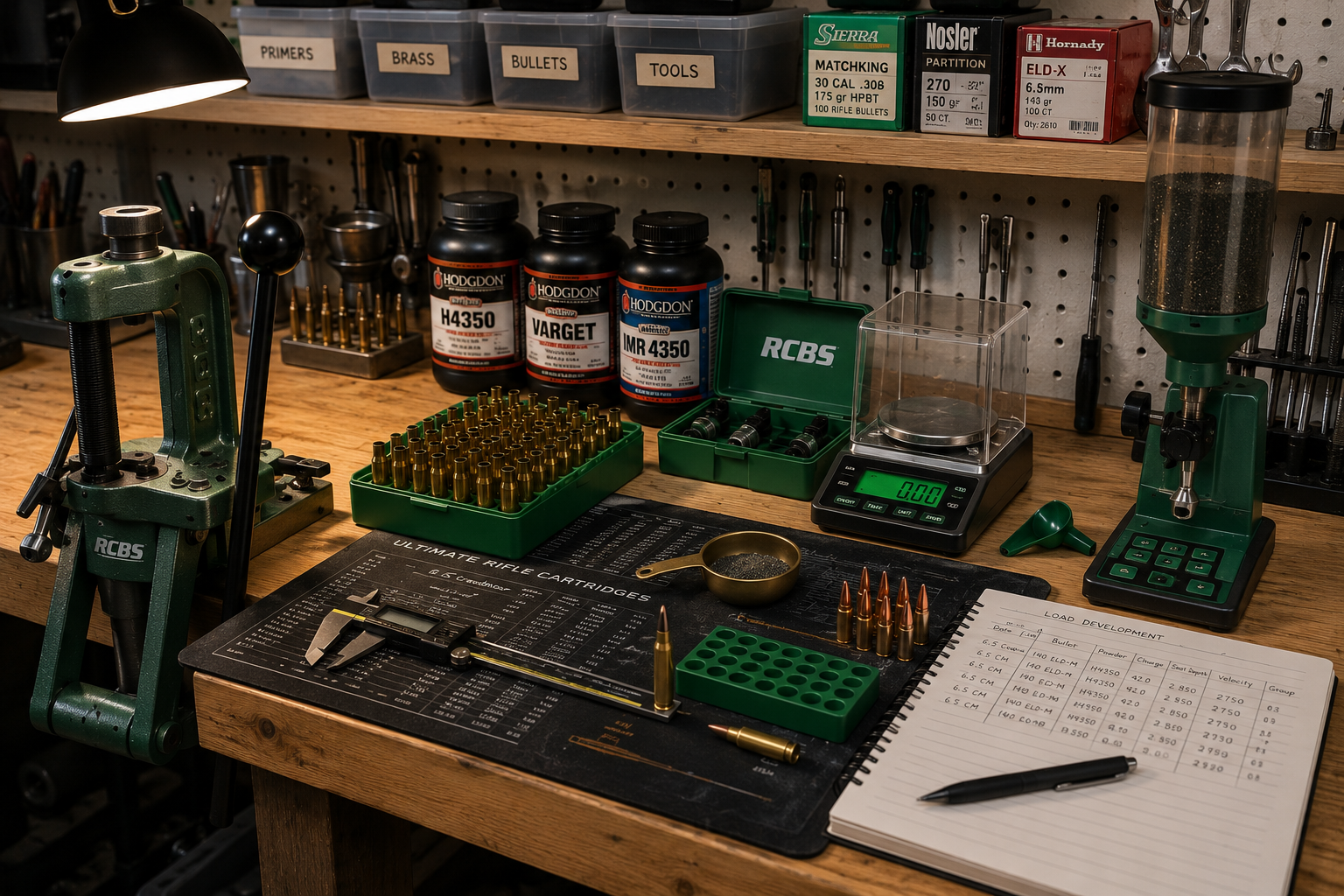
    Rather than buying factory ammunition, reloaders reuse fired brass and assemble new cartridges using specialised equipment such as presses, dies, powder scales, and case preparation tools.

    The process allows shooters to tailor ammunition specifically to their rifle.

    Why Shooters Reload

    Every rifle behaves differently.

    Factory ammunition is designed to work safely across thousands of rifles, but handloaded ammunition can be tuned for:

    • Accuracy 
    • Velocity 
    • Recoil 
    • Barrel performance 
    • Specific bullet types 
    • Consistency 

    Precision shooters often find that carefully developed reloads outperform most factory ammunition.

    Cost Savings — But Not Always Immediately

    One of the most common reasons shooters begin reloading is cost.

    For popular calibres such as:

    • .223 Remington 
    • .308 Winchester 
    • 6.5 Creedmoor 

    …reloading can significantly reduce the long-term cost per round.

    However, there’s an important catch: initial setup costs can be high.

    A basic reloading setup may include:

    • Press 
    • Dies 
    • Powder scale 
    • Calipers 
    • Priming tools 
    • Case trimmer 
    • Cleaning equipment 

    Many reloaders eventually discover the hobby becomes less about saving money and more about shooting higher-quality ammunition for the same budget.

    Accuracy and Load Development

    This is where reloading becomes addictive for many shooters.

    Load development involves carefully testing combinations of:

    • Powder type 
    • Powder charge 
    • Bullet seating depth 
    • Bullet weight 
    • Primer choice 

    The goal is to find the most accurate and consistent load for a particular rifle.

    Small changes can dramatically affect:

    • Group size 
    • Velocity spread 
    • Barrel harmonics 
    • Pressure levels 

    Long-range and competition shooters often spend significant time refining loads to achieve maximum consistency.

    Reloading Requires Discipline

    Reloading is not something to rush.

    Unlike factory ammunition, the responsibility for safety rests entirely with the reloader. Mistakes involving powder charges or incorrect components can be dangerous.

    Safe reloaders follow published load data carefully and maintain detailed records of:

    • Powder charges 
    • Cartridge overall length 
    • Velocities 
    • Pressure signs 
    • Accuracy results 

    Consistency and attention to detail are critical.

    Why Record Keeping Matters

    Most experienced reloaders keep detailed logs for every load they develop.

    Without proper records, it becomes difficult to remember:

    • Which load performed best 
    • Which brass has been reused multiple times 
    • Velocity data from previous sessions 
    • Safe pressure limits already tested 

    This is one area where digital tools are becoming increasingly useful.

    Instead of paper notebooks or spreadsheets, many shooters now track:

    • Reload recipes 
    • Brass life cycles 
    • Chronograph data 
    • Group sizes 
    • Round counts 
    • Rifle-specific load performance 

    Having all this information searchable and organised makes load development far easier over time.

    Component Availability and Modern Reloading

    Recent years have shown how unpredictable ammunition supply can become.

    Shortages of:

    • Primers 
    • Powder 
    • Brass 
    • Factory ammunition 

    …have encouraged more shooters to start handloading so they can maintain a consistent supply of ammunition for training and competition.

    Reloaders who maintain organised inventories are often far better prepared when supplies become difficult to source.

    Is Reloading Worth It?

    For many shooters, absolutely.

    Reloading offers:

    • Better accuracy potential 
    • Greater ammunition consistency 
    • More control over performance 
    • Long-term cost benefits 
    • A deeper understanding of ballistics and shooting 

    But it also requires:

    • Time 
    • Patience 
    • Attention to detail 
    • Safe working practices 

    For shooters who enjoy the technical side of firearms, reloading often becomes just as enjoyable as shooting itself.

    Final Thoughts

    Reloading is more than simply making ammunition — it’s about precision, consistency, and understanding how your rifle performs.

    As more shooters move toward data-driven shooting and performance tracking, organised record keeping is becoming increasingly important. Tracking load data, brass usage, round counts, and performance history digitally can save huge amounts of time and help shooters develop safer and more accurate loads over the long term.

    For modern shooters, reloading and digital rifle management increasingly go hand in hand.

  • Understanding the Proposed UK Shotgun Licence Changes

    Understanding the Proposed UK Shotgun Licence Changes

    Understanding the Proposed UK Shotgun Licence Changes

    The UK firearms licensing system could be facing its biggest overhaul in decades. Following several high-profile incidents and ongoing government reviews, proposals are being discussed that would fundamentally change how shotguns are licensed and regulated across the UK.

    For many shooters, farmers, clay competitors, and gamekeepers, these potential changes could have a major impact on everyday firearm ownership.

    Here’s what’s changing — and what it could mean for certificate holders.

    What Is the Current System?

    At the moment, UK firearms law separates guns into two main categories:

    • Section 1 firearms — typically rifles and certain restricted firearms 
    • Section 2 firearms — most sporting shotguns 

    Shotguns held under a Shotgun Certificate (SGC) are generally subject to less restrictive licensing rules than rifles held on a Firearm Certificate (FAC).

    For example:

    • Shotgun owners do not currently need to demonstrate a specific “good reason” for each individual shotgun owned.
    • Section 2 shotguns can usually be purchased without individual firearm “slots” on a certificate.
    • Lending rules and age restrictions are different under Section 2. 

    The government is now considering whether those distinctions should continue.

    Why Are Changes Being Proposed?

    The proposed reforms largely stem from concerns raised after the 2021 Plymouth shooting and other incidents involving legally held firearms.

    Government reviews and coroners’ reports highlighted concerns around:

    • Police licensing consistency 
    • Background checks 
    • Medical information sharing 
    • Certificate verification 
    • Oversight of shotgun ownership 

    In response, the Home Office has already introduced some tighter rules and is considering broader reforms to align shotgun licensing more closely with rifle licensing.

    Changes Already Introduced

    Some changes are already in force.

    Two Referees Now Required

    As of August 2025, shotgun certificate applications now require two referees instead of one. Applicants must also provide more detailed background information, including declarations of offences and convictions.

    This change was introduced following recommendations after the Plymouth inquests.

    What Could Change Next?

    The biggest proposed reform is the possible merging of Section 2 shotgun licensing into the stricter Section 1 firearm system.

    If implemented, shotgun owners could face:

    “Good Reason” Requirements

    Shotgun certificate holders may need to justify ownership of each individual shotgun in the same way rifle owners currently do.

    That could mean demonstrating:

    • Sporting use 
    • Pest control requirements 
    • Club membership 
    • Land permissions 

    Tighter Purchase Controls

    Instead of being able to acquire shotguns freely within certificate conditions, owners may need individually authorised slots for each firearm.

    Stricter Lending and Age Rules

    Some proposals suggest tighter restrictions around:

    • Lending shotguns 
    • Youth access 
    • Temporary possession rules 

    Current Section 2 rules allow younger supervised use in some circumstances that would likely disappear under a Section 1-style system.

    Possible Storage Changes

    There have also been discussions around tougher storage requirements, including proposals for off-site storage in some circumstances. Rural groups have raised concerns that this could negatively affect farmers and pest control activities.

    Rising Costs for Certificate Holders

    Firearms licensing fees have already increased significantly.

    In February 2025:

    • Firearm certificate fees rose from £88 to £198 
    • Shotgun certificate fees rose from £79.50 to £194 

    Many shooting organisations argue that further licensing complexity could increase costs and delays even more.

    What Shooting Organisations Are Saying

    Groups such as British Association for Shooting and Conservation and the Countryside Alliance have criticised the proposed changes, arguing that the existing laws are already among the strictest in the world and that the real issue is inconsistent enforcement and under-resourced licensing departments.

    Many within the shooting community believe:

    • Better police resourcing would improve safety more effectively than new restrictions
    • Digital licensing systems could reduce fraud and delays 
    • Existing legislation is already sufficient when properly enforced 

    What Happens Next?

    At the time of writing, the Home Office is expected to continue consultations on shotgun licensing reform. While no final legislation has yet been introduced, the direction of travel suggests tighter regulation is likely.

    For certificate holders, this means staying informed is more important than ever.

    Final Thoughts

    The proposed shotgun licence changes represent one of the most significant potential shifts in UK firearms law in recent years.

    Whether the reforms ultimately improve public safety or simply increase bureaucracy remains heavily debated. What is clear, however, is that responsible shooters may soon face:

    • More paperwork 
    • Higher costs 
    • Stricter ownership criteria 
    • Greater scrutiny during licensing 

    For shooters who already maintain organised records, secure storage, and responsible ownership habits, adapting may be easier than for those relying on paper notes and memory alone.

    As firearms regulation continues to evolve, keeping accurate digital records of firearms, certificates, maintenance, and shooting activity is becoming increasingly valuable for UK shooters.

  • Ammunition Management for UK Gun Owners

    Ammunition Management for UK Gun Owners

    Ammunition Management for UK Gun Owners

    Keeping on top of your ammunition is one of those jobs that sounds simple… until it isn’t.

    A few boxes here, a range day there, some rounds used for zeroing, a bit held back for stalking or pest control — before long, you’re relying on memory. And when your firearm certificate sets out what ammunition you’re authorised to possess, “roughly right” isn’t really the standard you want to be working to.

    That’s where Rifle Manager helps.

    Rifle Manager gives UK shooters a simple, organised way to keep track of firearms, ammunition, locations and shooting activity in one secure place. No messy notes. No mystery round counts. No last-minute digging around before a renewal, variation, range booking or trip out.

    Why ammunition records matter

    In Great Britain, firearm and ammunition possession is mainly regulated under the Firearms Act 1968, and GOV.UK makes clear that you need the appropriate certificate to possess, buy or acquire firearms and ammunition. 

    For Section 1 firearms, your certificate will normally specify the calibres and the maximum amount of ammunition you’re authorised to possess. The current Firearms Form 201 also asks applicants to provide “details of the maximum amount of ammunition to be possessed” by calibre and quantity. 

    So, good ammunition management is not just tidy admin. It helps you stay aware of what you have, what you’ve used, and whether your records match the limits and conditions on your certificate.

    A few key things to keep in mind

    Your firearm certificate is the starting point. Always check the exact wording, calibres, quantities and conditions on your own certificate.

    Section 1 ammunition must be kept secure. The Home Office firearms security handbook says ammunition for Section 1 firearms must be kept secure and, as best practice, should be stored in its own secure storage, such as a lockable compartment within a gun cabinet. 

    Shotgun cartridges are treated differently, but sensible storage still matters. The same handbook notes that secure storage of shotgun cartridges is not a Firearms Acts requirement, but recommends locking them away for security and safety, especially where children are present. 

    Transfers deserve proper checks. The National Crime Agency advises anyone transferring firearms or ammunition to another certificate holder to always see the original certificate, check the document, compare it with their own, and make sure the photograph matches the person presenting it. 

    Reloading and component parts need care too. GOV.UK states that the Firearms Act 2023 introduced an offence relating to possession of component parts of ammunition with intent to assemble ammunition without authorisation. 

    And finally, rules can vary by location and circumstance. GOV.UK’s main firearms licensing page applies to England, Scotland and Wales, and individual police forces and certificate conditions matter. Northern Ireland has its own firearms licensing regime, so always check the rules that apply where you live and shoot. 

    How Rifle Manager helps

    Rifle Manager is built to make the admin easier.

    You can record the ammunition you hold by calibre, keep track of purchases and usage, and maintain a clearer picture of what’s in your cabinet. Whether you’re logging a range session, updating your stock after a visit to your RFD, or checking what you have before ordering more, Rifle Manager keeps the information together.

    That means you can quickly see what you’ve got, what you’ve used, and what may need replenishing — without relying on scraps of paper, old text messages, or that “I’m sure I had another box somewhere” moment.

    Built for real shooters, not spreadsheet fans

    Most shooters don’t want more admin. They want less of it.

    Rifle Manager is designed for the reality of UK shooting: different calibres, different firearms, different shooting permissions, different outings, and the constant need to keep things neat, accurate and easy to find.

    Use it to:

    • Track ammunition by calibre
    • Log ammunition added or used
    • Keep firearm, inventory, location and shoot records together
    • Build a clearer picture of your shooting activity
    • Support better preparation for renewals, variations and conversations with your licensing team

    It is not a replacement for your certificate, your legal responsibilities, or proper advice from your firearms licensing department. But it is a practical tool to help you stay organised, informed and in control.

    Less guesswork. Better records. Easier shooting admin.

    Ammunition management does not need to be complicated.

    With Rifle Manager, you can keep your records tidy, your round counts clearer, and your shooting admin in one place — so when you need the information, it’s there.

    No faff. No rummaging. No “I’ll sort it later.”

    Just a better way to manage your rifles, ammunition and shooting records.